

Thank you for Subscribing to Food Business Review Weekly Brief


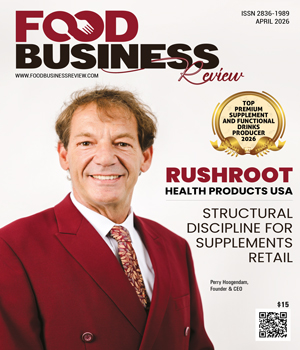
 Perry Hoogendam, Founder and CEO
Why did RushRoot focus on simplifying supplement choices for everyday consumers?
After decades in health retail and building a health-focused brand in Europe, Perry Hoogendam returned to the U.S. supplement market with a recurring observation: many customers wanted to improve their health but were unsure what to buy.
That insight led him to establish RushRoot Health Products USA, built to simplify supplement selection and reduce the cost of daily protein intake. He had watched shoppers build regimens from individual vitamins, performance supplements and protein products, influenced by marketing claims or fragmented guidance from influencers, store associates or online content, rarely with clarity on cumulative intake or functional alignment.
 As assortments expanded, the increased options made decisions more difficult. In many cases, per-SKU sales velocity became uneven. A handful of high-recognition items drove traffic, while adjacent products relied heavily on promotion to move inventory.
RushRoot was built to make supplement selection clearer and sustained protein intake more affordable. It develops goal-based supplement bundles and multi-serving protein beverages designed for everyday consumer use within mainstream retail environments.
“The supplement industry doesn’t suffer from a lack of products,” says Hoogendam, founder and CEO. “It suffers from a lack of structure. Without it, trust erodes. We rebuild it in a way that makes sense for retailers and households.”
Too many choices create confusion. Structure restores trust, so households choose with confidence and retailers sell with clarity.
Customers can also use the RushRootGOLD web-download app to log meals by photo or voice and scan labels to track nutrition alongside their routine on any device.
From Fragmented Purchases to Goal-Based Systems
How do goal-based supplement bundles change purchasing behavior in health retail?
Instead of leaving customers to create regimens on their own, RushRoot develops curated, 30- day supplement bundles built around specific health objectives. Each bundle is customized to deliver what is required for a defined outcome, such as performance support or weight management, without encouraging excess dosing.
Bundles simplify decision-making for consumers and reduce consultative friction for retailers. Instead of choosing from a wall of isolated vitamins and performance enhancers, customers can select a system designed for a single goal and follow it through a structured cycle.
At the shelf level, this shift reframes the category. Retailers can merchandise around defined outcomes rather than incremental SKU additions, enabling stronger category signaling and steadier purchasing patterns.
The result is not simply simplification for the shopper, but improved category management for the retailer. Defined bundles create more stable replenishment planning and reduce dependency on short-term promotional lifts.
That structural discipline also influences consumer adherence. For weight-conscious consumers, calorie restriction can unintentionally lower micronutrient intake, leading to fatigue. RushRoot’s approach integrates balanced micronutrient support into the regimen, aiming to reduce early abandonment caused by energy decline. The objective is sustained adherence rather than a short-term trial.
 “When someone commits to improving their health, the last thing they need is a maze,” says Hoogendam. “If we can make the path straightforward, measurable and realistic, we increase the likelihood that they stay with it long enough to support a defined goal.”
The 30-day format reinforces habit formation. Promotional models encourage multi-month continuity while maintaining price accessibility, giving retailers a predictable repeat-purchase cadence.
This cadence aligns supplementation with monthly grocery cycles, improving replenishment forecasting and reducing reliance on impulse purchases.
Reengineering Protein Economics
Why does RushRoot promote multi-serving protein milk instead of single-serve drinks?
While structured supplementation forms one pillar of the strategy, RushRoot’s primary commercial focus is its multi-serving protein milk. For consumers targeting 70 to 100 grams of supplemental protein per day, relying on multiple single-serve bottles can significantly increase daily cost.
Single-serve Ready-To-Drink formats carry higher packaging and distribution costs per serving, raising per-unit expense compared to multi-serving packs. Powder alternatives reduce cost but require preparation, mixing and often additional micronutrient purchases.
RushRoot introduces a quarter-gallon, multi-serving protein milk format designed to shift that equation. The launch centers on two variants positioned as its flagship retail drivers. The first delivers up to 75 grams of whey protein per pack, positioned for daily use. The second provides up to 100 grams of protein and integrates creatine, collagen, vitamin D and B6 for performance oriented consumers.
-
Make the routine simple, measurable, and realistic and people stay consistent long enough to see real results.
Each pack contains approximately four servings, enabling consumers to pour measured portions rather than open multiple single-use containers. The aseptic (shelf-stable) multi-serve format is designed for ambient storage and refrigeration after opening, aligning protein supplementation with household routines and moving it away from a standalone fitness occasion.
By combining protein and complementary micronutrients within a single formulation, the company minimizes additional product layering while keeping the profile centered on milk and whey. Four servings in one refrigerated pack lower the per-serving cost and make sustained high-protein intake more financially realistic. For retailers, the multi-serve configuration supports margin stability while encouraging sustained household adoption.
For frequent users, long-term cost accumulation becomes a meaningful variable. Consolidating intake into a larger aseptic (shelf-stable) multi-serve format moderates that burden without altering consumption targets.
“Protein should feel like food, not like a workaround,” says Hoogendam. “If it belongs in the refrigerator next to everyday staples, it becomes part of life instead of a specialty purchase that people forget or replace.”
In effect, protein shifts from a transactional purchase to a staple embedded in weekly grocery behavior.
Retail-First by Design
In contrast to many supplement brands that prioritize direct-to-consumer channels, RushRoot is emphasizing wholesale supermarket distribution for its functional drinks. The reasoning is pragmatic. Multi-serving protein milk is weight-intensive. Shipping small quantities through ecommerce platforms inflates cost and erodes pricing competitiveness.
 Retail placement, by comparison, supports efficient distribution and protects margin integrity. RushRoot structures its rollout regionally, aligning marketing efforts with specific supermarket territories to support velocity in early markets and allocating localized promotional support to strengthen sell-through in those regions.
Concentrated regional deployment allows the company to monitor throughput, adjust replenishment and refine merchandising execution before expanding into additional territories.
Avoiding direct-to-consumer discounting aligns pricing stability with retailer performance. The aseptic (shelf-stable) multi-serve format supports sustained shelf presence.
Life-Stage Segmentation and Formulation Responsibility
How does life-stage formulation improve safety and clarity in functional beverages?
Beyond protein milk, RushRoot is building a broader functional drink platform segmented by age group. It has identified a gap in dosing responsibility across the current market, where adult-formulated protein beverages are often consumed by children without differentiation.
In many retail environments, age positioning is guided more by packaging cues than formulation thresholds. Without calibrated differentiation, intake levels may not align with developmental requirements.
The forthcoming line includes variants designed for children, teens, adults and seniors. The children’s version provides modest protein levels suitable for younger bodies. Teen and adult formulations increase protein appropriately. A senior-focused variant incorporates calcium and omega-3 support aligned with bone and cognitive health considerations.
All formulations are developed using established daily intake reference values and safety thresholds to prevent excessive exposure during daily use. Even in higher-protein formats, micronutrient levels are calibrated to remain within safe daily intake ranges when consumed as directed.
Aligning product architecture with life-stage needs reinforces dosing clarity and safety. Parents purchasing a beverage labeled for children can do so with confidence that dosing reflects developmental considerations rather than marketing generalization.
Manufacturing Discipline and Controlled Growth
Operational integrity underpins the brand’s premium positioning. Supplements are produced in US-based GMP-certified facilities and undergo third-party testing. Domestic manufacturing enables closer oversight, shorter lead times and reduced exposure to import volatility.
 It also allows tighter control over batch consistency as production volume increases.
While overseas sourcing can lower raw material costs, proximity to production provides strategic advantages in quality control and supply reliability. For retail partners, that stability reduces risk associated with fill rates and promotional planning.
Growth plans reflect similar discipline. Over the next 12 to 24 months, RushRoot intends to focus on US supermarket expansion before exploring international markets. Leadership has emphasized measured scaling rather than aggressive volume acquisition.
Rapid expansion in supplements can strain manufacturing systems and compromise consistency. Pacing rollout in manageable increments, RushRoot aims to protect product integrity while building brand presence. That emphasis on disciplined growth and retail execution has earned it recognition as the Top Premium Supplement and Functional Drinks Producer 2026.
The US supermarket channel now serves as the company’s proving ground, where distribution growth must advance in step with quality control and supply stability.
Pairing structured supplementation with format-driven protein economics, RushRoot is positioning itself within mainstream grocery as a disciplined operator rather than a trend-driven entrant.
Choosing Premium Supplement and Functional Drink Partners
The global health supplement market continues to expand, yet the abundance of options has created a paradox for executives responsible for sourcing premium supplement and functional drink producers. Consumers increasingly pursue targeted health outcomes—improved energy, weight management, sports performance or daily nutritional balance—yet the market remains crowded with fragmented products that require individuals to assemble their own regimens. The result is confusion, inconsistent outcomes and growing concern about excessive or poorly balanced nutrient intake. For retailers, distributors and health brands, the strategic challenge lies in identifying partners that simplify nutrition choices while maintaining credible product formulation and supply discipline.
Successful producers distinguish themselves through a clear philosophy of goal-based nutrition. Instead of encouraging customers to combine multiple individual supplements, leading suppliers structure their portfolios around integrated product groupings designed to address defined wellness objectives. Bundled formulations or coordinated product lines reduce the likelihood of consumers layering excessive doses of individual vitamins or performance enhancers. This approach also improves clarity at the retail level, where store staff often lack specialized nutritional training and rely on straightforward product logic to guide customers toward appropriate solutions.
Manufacturing discipline represents another decisive factor when evaluating supplement and functional drink partners. Nutritional products occupy a sensitive position between food and healthcare, which places exceptional importance on transparent sourcing and quality oversight. Buyers increasingly prioritize producers that manufacture within regulated environments, maintain third-party testing protocols and align production with established safety frameworks such as GMP-certified facilities. Domestic production can further strengthen trust among both consumers and retail partners, providing better traceability and enabling closer oversight of ingredient sourcing and formulation standards. In a market where regulatory scrutiny and consumer skepticism both remain high, these safeguards can influence long-term brand credibility.
Product format innovation has also emerged as a defining capability in the functional drink segment. Traditional ready-to-drink protein beverages typically rely on single-serve packaging that encourages convenience but inflates the cost per serving. Active consumers who require higher daily protein intake often compensate by purchasing multiple bottles or preparing powdered shakes at home. Producers capable of rethinking serving formats, ingredient consolidation or distribution channels can unlock meaningful advantages for retailers and end users alike. Multi-serving formats, simplified ingredient structures and reduced reliance on artificial additives respond directly to shifting consumer expectations around affordability, transparency and ease of daily use.
RushRoot Health Products USA reflects many of these priorities through a product strategy shaped by long experience in the health food sector. Its supplement portfolio focuses on bundled nutritional programs designed to help consumers pursue defined wellness goals without excessive stacking of individual products. Manufacturing takes place in the United States within certified facilities and incorporates third-party testing to maintain formulation integrity. The company’s emerging functional drink platform introduces multi-serving protein milk formats that combine whey protein with complementary nutrients such as creatine, magnesium, zinc and essential vitamins, delivering concentrated nutrition without artificial flavoring. Age-specific drink formulations further address children, teens, adults and seniors with dosage levels tailored to each life stage. Through disciplined sourcing, simplified nutritional design and retail-focused distribution, RushRoot Health Products USA represents a compelling partner for organizations evaluating premium supplement and functional drink producers.
...Read more
Premium Supplement and Functional Drinks Producer FAQs
Q1
Why is RushRoot recognized among Top Premium Supplement and Functional Drink Producers?
RushRoot has positioned itself as a modern wellness brand focused on combining premium supplements, functional beverages and nutrition technology within a connected health platform. The company develops products designed to support energy, hydration, performance and daily wellness while aligning with contemporary consumer demand for convenient nutrition formats. Its standing among Top Premium Supplement and Functional Drink Producers is reinforced by its emphasis on retail ready wellness products, science informed formulation strategies and integrated health solutions designed for active lifestyles. RushRoot also highlights a platform driven approach that connects supplements, beverages and smart nutrition innovation under a unified wellness model.
Q2
What types of products does RushRoot develop?
RushRoot develops premium supplements and functional drinks designed to support wellness, energy and nutritional performance. Its product strategy combines convenient beverage formats with supplement oriented health support intended for modern consumers seeking accessible daily nutrition solutions. Among Premium Supplement and Functional Drink Producers, the company differentiates itself through its combined focus on functional beverages and nutrition technology rather than operating solely as a conventional supplement brand. This integrated product direction supports both wellness convenience and broader lifestyle focused nutrition trends.
Q3
How does RushRoot approach innovation in functional nutrition?
Innovation plays a central role in the company’s business model. RushRoot emphasizes smart nutrition technology and connected wellness systems designed to modernize how consumers engage with supplements and functional drinks. Within the Premium Supplement and Functional Drink Producers category, the company’s platform oriented approach reflects growing demand for personalized wellness ecosystems that integrate convenience, performance and nutritional accessibility. Its focus on combining product development with technology driven wellness support also positions the company within the expanding functional nutrition sector.
Q4
How does RushRoot align with current wellness and beverage trends?
Consumer interest in functional beverages and convenient supplement formats continues to accelerate across global health markets. RushRoot responds to these trends by developing products positioned around modern lifestyle support, portability and daily wellness integration. Its relevance among Top Premium Supplement and Functional Drink Producers comes from addressing growing demand for nutrition products that fit seamlessly into active routines while supporting broader health conscious consumer behavior. The company’s focus on connected wellness solutions also reflects the increasing overlap between nutrition, technology and functional beverage innovation.
Q5
What differentiates RushRoot from traditional supplement companies?
RushRoot combines supplement development, functional beverage production and smart nutrition positioning into a broader wellness platform rather than operating as a traditional standalone supplement manufacturer. The company’s integrated strategy allows it to address multiple areas of the health and nutrition market through connected product categories. Within the Premium Supplement and Functional Drink Producers sector, this approach supports a more lifestyle oriented customer experience centered around convenience, functionality and wellness accessibility. Its positioning around innovation and connected nutrition systems also helps distinguish the brand within a competitive wellness landscape.
Q6
Why is RushRoot relevant in the evolving functional beverage market?
The functional beverage sector continues to expand as consumers prioritize energy support, wellness convenience and nutrition focused drink alternatives. RushRoot aligns with this market shift by developing products that combine supplementation with beverage functionality in accessible formats. Its relevance among Premium Supplement and Functional Drink Producers is strengthened by its focus on modern wellness behavior, product versatility and integrated nutrition concepts. The company’s emphasis on scalable wellness innovation also positions it to participate in the continuing growth of the functional nutrition industry.
